President Peter Mutharika has rated his administration’s first year in office as a success, noting that while some challenges remain, it has laid a strong foundation to build an economically independent Malawi.
The President gave the rating in an interview with taxpayer-funded Malawi Broadcasting Corporation (MBC) last night on the first anniversary of his return to power following his victory in the September 16 2025 General Election.
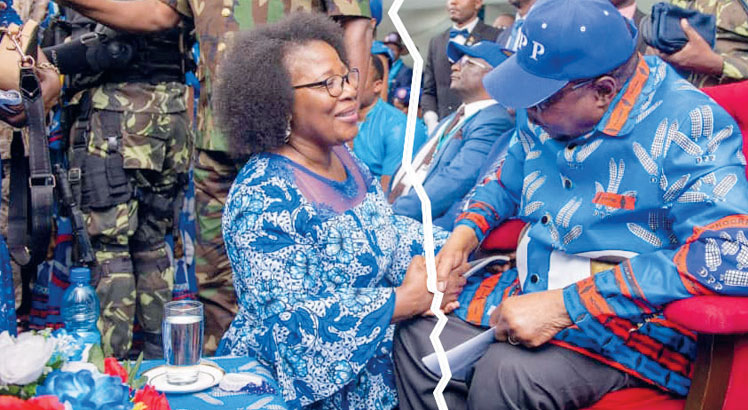
Mutharika described his first year back as a “rollercoaster,” but expressed satisfaction with his government’s progress so far.
He highlighted key strides made under his flagship “4Fs” agenda covering food, fuel, forex and fertiliser.
Said the President: “The cost of maize per 50kg bag has dropped from over K100 000 to around K35 000, making food both available and affordable for everyone.
“As for fertiliser, we launched this year’s programme last week in Ntchisi, so the Farm Inputs Subsidy Programme [Fisp] is already up and running.”
Minister of Agriculture, Irrigation and Water Development Roza Mbilizi launched the 2026/27 Fisp with an assurance that farmers will access inputs on time, but declined to disclose fertiliser suppliers.
During the launch, she said the programme has secured 70 000 metric tonnes (MT) of fertiliser and will benefit 1 221 862 resource-constrained smallholder maize farming households.
Giving a breakdown of the package, she said each beneficiary will contribute K20 000 for a 50 kilogramme (kg) bag of fertiliser and K10 000 for a 5kg pack of maize seed.
Under the revised Fisp as unveiled in July this year, 610 931 smallholder farmers are expected to directly receive subsidised inorganic fertiliser and certified seed while 1 221 862 are to be reached indirectly through integration of Mbeya organic fertiliser production.
Commenting on erratic fuel availability, Mutharika argued that his government stabilised the supply within its first 12 months, but admitted that the supply now faces hurdles due to global challenges.
“There have been challenges here and there—some due to the international situation, transportation, and so forth—but we are working on them,” he said.
Mutharika also hoped that the foreign exchange challenges will ease once discussions with the International Monterey Fund (IMF) are done to revive the Extended Credit Facility (ECF).
The President also pointed to the introduction of free secondary education, expanded higher education student loans, and major ongoing road maintenance projects, including the M1 rehabilitation.
He also cited restored public freedoms and strong private-sector partnerships, particularly with commercial banks funding local infrastructure, as vital milestones.
Said the President: “It is going to be a rough road, no question about it. Austerity measures are painful as people do not like to pay tax, but we have to make sacrifices and that’s what we are doing.
“Unfortunately, we do not generate enough income from domestic sources to fund all our activities, whether the recurrent or development budget. We do not have enough. So, we have to borrow, but we must borrow very wisely, and only for development purposes, not for consumption.”
Economics Association of Malawi (Ecama) president Bertha Bangara-Chikadza has said notable developments under Mutharika include the introduction of free secondary education and government interventions to increase the supply of maize, which have helped reduce food prices.
However, she said significant challenges remain.
“Households and businesses continue to experience four to six hours of load shedding, disrupting production and raising operating costs.
“Foreign-exchange shortages also continue to constrain economic activity. Overall, the first year shows some progress, but the recovery remains incomplete and fragile,” said Bangara-Chikadza, who teaches economics at the University of Malawi (Unima).
On his part, governance expert Gift Sambo, another Unima academic, said the Mutharika government is finding it difficult to assert its authority in the fight against corruption.
“Recent scandals involving critical public institutions suggest that the Mutharika administration is failing to enforce bureaucratic accountability. There is a need for the political executive to come up with mechanisms that could minimise such agency problems,” he said.
Malawians voted Mutharika back into office with a 56.8 percent approval to secure an outright victory under the 50-percent-plus-one vote system of determining the presidential election winner implemented for the second time in the country. He defeated then incumbent Lazarus Chakwera.
Ironically, in the court-sanctioned fresh presidential election of June 2020, Mutharika was voted out as Malawians gave him 38 percent of the vote against 58.7 percent for Malawi Congress Party’s Chakwera who had teamed up with the then Vice-President Saulos Chilima under the Tonse Alliance banner.